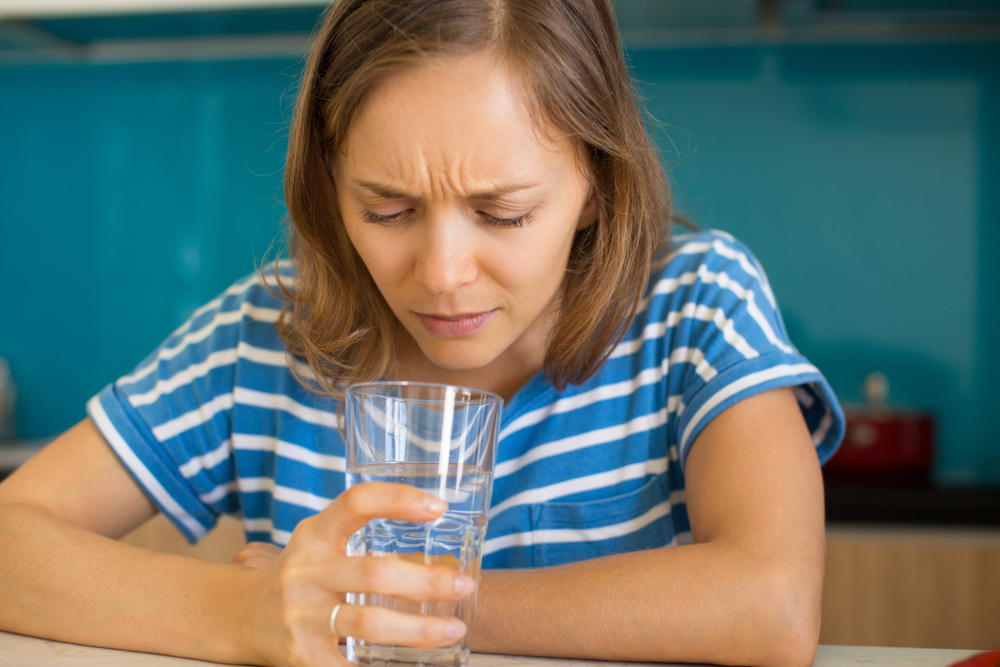
You pull a clean glass from the cabinet, press it against the refrigerator dispenser or hold it under the kitchen tap, and wait for that refreshing stream of crystal-clear water. But as the glass fills, you pause. There is a slight yellowish tint you haven’t noticed before, or perhaps a faint whiff of something resembling a swimming pool or (much worse) rotten eggs. You take a hesitant sip, and the metallic tang confirms it: something is off.
When your water quality suffers, it isn’t just a blow to your palate. Poor water quality can jeopardize your family’s health, corrode your expensive plumbing fixtures, and significantly shorten the lifespan of appliances like your water heater and washing machine. While some water issues are harmless (and mostly annoying), others can point to conditions that make your water less safe — and that’s worth taking seriously.
If you’ve been second-guessing what’s coming out of your taps, keep reading to learn about the most common signs of contaminated water and what you can do about these issues.
What “Contaminated Water” Can Mean
What does “contaminated water” actually mean, anyway? In everyday conversations, people use the term for anything that tastes weird or looks discolored. In reality, there’s an important difference between aesthetic issues and true contamination concerns, and knowing the difference can help you respond appropriately.
Aesthetic issues are the things you notice with your senses: taste, odor, and color. For example, a metallic taste could be related to minerals or corrosion in plumbing, while a slight “earthy” odor can sometimes be tied to harmless organic material. Discoloration (like a yellow or brown tint) may be the result of disturbed particles in the line. These problems can make water unpleasant, but they aren’t always dangerous.
True contamination concerns involve substances that could pose health risks depending on the type and level. That may include bacteria, viruses, nitrates, heavy metals (like lead), chemical pollutants, or other contaminants that you can’t necessarily see or smell. The tricky part? Some of the more serious issues aren’t visible to the naked eye, meaning your water can look perfectly normal while still being problematic.
Common Signs of Poor Water Quality
Have you ever found yourself holding a glass of water from the tap and asking, “Is this just gross… or actually unsafe?” If so, it’s time to understand the specific signs of poor water quality.
Unusual Odors
Water doesn’t usually smell like anything in particular, but if there are high levels of contaminants, it may take on a unique scent. For example, a rotten egg smell often suggests sulfur-related issues, which can come from naturally occurring compounds or bacteria in plumbing systems. Either way, it’s not something you should ignore.
Even a chlorine smell, which can be normal with treated municipal water, can be a concern if it seems unusually strong.
Bad Tastes
A metallic, bitter, or chemical taste isn’t something you should just learn to live with. Changes in your water’s taste can come from minerals, plumbing corrosion, treatment levels, or other factors. But regardless of the cause, your water shouldn’t be unpleasant to drink. If your family has started buying bottled water because the tap water tastes off, that’s a strong sign something needs attention.
A Cloudy Appearance
Cloudy or murky water is another potential sign of poor water quality. Sometimes, the cloudiness is simply due to air bubbles that will clear in a few seconds. Other times, persistent cloudiness can point to sediment, buildup, or disturbed particles in the line. If it’s happening consistently or across multiple faucets, it’s a good idea to hire a plumber to investigate the problem.
Discoloration
Yellow, orange, or brown water often indicates rust or sediment is present, which can come from older pipes, corroded components, or shifting in the water main. Blue-green tinting may also suggest corrosion in copper plumbing.
Even if discoloration clears up, it’s worth paying attention to patterns: when it happens, how long it lasts, and whether it’s tied to hot water, cold water, or both.
Scale Buildup
White crust on faucets and showerheads is a classic sign of hard water mineral buildup. While hardness is typically more of a plumbing-and-appliance issue than a direct health concern, it can cause scaling inside pipes and reduce efficiency in water heaters. Over time, that can mean higher energy bills and more frequent repairs.
How Saffer Plumbing Can Help Baltimore Homeowners
Not sure how to address your poor water quality issues? At Saffer Plumbing, we believe that no homeowner should have to guess about the safety of their tap water. That’s why we provide comprehensive water testing services.
Once we know what’s causing your tap water to seem off, we walk you through practical solutions. That might include recommendations for water treatment systems that address minerals and sediment or plumbing repairs to fix corroded or aging components. No matter what we recommend, you can have peace of mind that the solution will match your home’s needs perfectly.
Get Answers to Your Poor Water Quality Concerns
If you’ve noticed signs of water contamination in your home, know that Saffer Plumbing can help identify what’s going on and recommend the right fix for your household, whether that includes a whole-home water filtration system or a water softener. Reach out today to request a free water test, and get the peace of mind that comes with clear answers and a plan you can trust.