
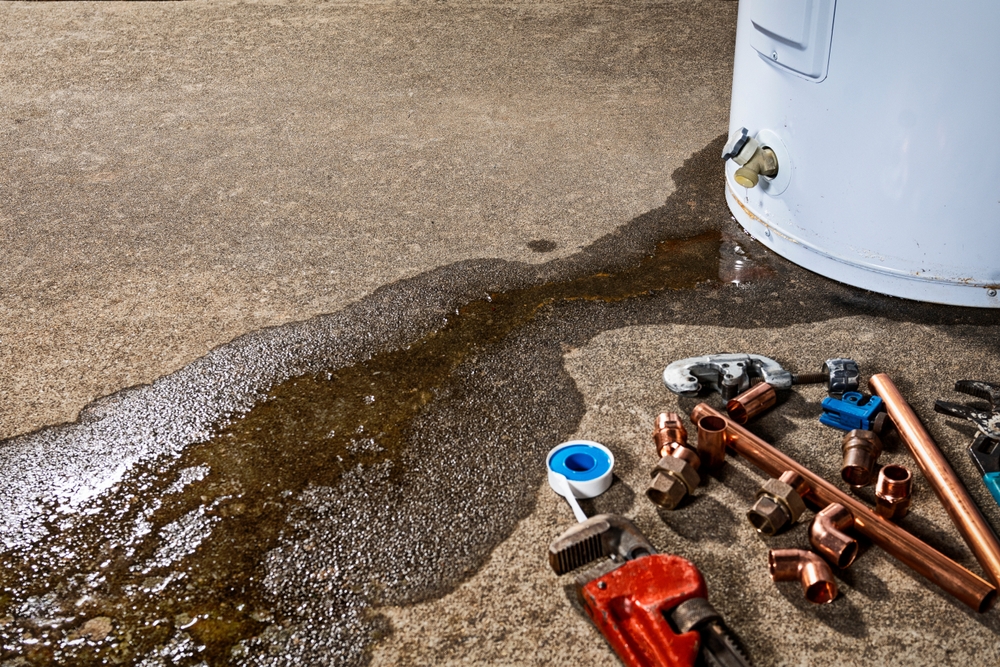
Have you recently gone out to your garage or stepped into your home’s utility closet only to find a mysterious puddle of water near your water heater? If so, you might be facing one of the most common yet potentially damaging household issues: a leaking water heater. While it might be tempting to ignore the damp mess and hope it dries up on its own, taking swift action is essential. Left unchecked, even a small leak can lead to significant water damage, mold growth, and costly repairs. But before you boil over with frustration, take a deep breath. All hope isn’t lost. The expert plumbers at Saffer Plumbing are ready to diagnose and fix the problem, helping restore your comfort and peace of mind.
Let’s dive into why your water heater may be leaking:
Common Causes of a Leaking Water Heater
So, why is your water heater leaking? Over time, water heating systems endure significant stress. The combination of high pressure, extreme heat, and constant use causes components to wear down. Eventually, they may allow water to seep into places they shouldn’t, leading to leaks you will want to take care of ASAP.
Before we look further at why hot water heaters leak in the first place, it’s important to note that some problems are minor and can be fixed with a simple plumbing repair, while others require you to invest in a new water heater installation. Rest assured, we have all the answers you need to make the best decision for your situation.
1. Faulty Temperature & Pressure Relief Valve (T&P Valve)
This valve is a critical safety component designed to release excess pressure from the tank. If the valve is faulty or has accumulated mineral deposits, it may open prematurely or fail to close properly, leading to leaks.
2. Loose or Worn Drain Valve
The drain valve, usually located at the bottom of the tank, is used for flushing out sediment. If it becomes loose or is no longer sealing correctly, it can leak. If your water heater looks like it’s leaking from the bottom, it may be the result of a faulty drain valve.
3. Corroded Tank
Sediment buildup inside the hot water tank can eventually lead to corrosion. Once rust eats through the tank lining, water can begin to escape. This is often a telltale sign that replacement is imminent.
4. Leaky Inlet or Outlet Connections
Water flows into and out of the tank through pipes. If these connections become loose, corroded, or improperly installed, they can cause your water heater to leak.
5. Cracked Internal Components
In electric water heaters, the heating elements can develop cracks. In gas models, internal expansion and contraction might compromise seals. These internal issues are not always visible from the outside but can lead to water leaks.
6. Excessive Pressure
Water pressure that is too high can stress your water heater. This might be caused by high municipal water pressure or a malfunctioning expansion tank, and it often results in water being forced out of weak spots.
What to Do When Your Water Heater Is Leaking
Is your water heater leaking from the top, side, or base? Here’s how you should address the problem accurately:
- Step 1: Turn Off the Power Supply. If you have an electric water heater, switch off the breaker. For gas models, turn off the gas supply.
- Step 2: Shut Off the Water Supply. Locate the cold water inlet valve and turn it off to stop the flow of water into the tank.
- Step 3: Call a Professional Plumber. Contact a licensed plumber and schedule an appointment for them to find the water leak right away. They will quickly assess the situation, diagnose the root cause of the problem, and recommend the best solution, whether that’s a water heater repair or full replacement.
- Step 4: Document the Damage. If your home has suffered water damage, take photos for insurance purposes.
- Step 5: Clean Up the Water. Use towels, a mop, or a wet/dry vacuum to remove standing water and minimize damage to floors and belongings while you wait for a plumber.
How a Professional Plumber Can Help With a Leaking Water Heater
When you call Saffer Plumbing, you’re not just getting someone with a wrench and a flashlight. You’re getting experienced professionals who understand the nuances of plumbing systems. We will thoroughly inspect your water heater, evaluating the condition of its tank as well as its individual components to pinpoint the exact source of the leak. The inspection process may include using advanced diagnostic tools to test water pressure levels and check for sediment buildup.
Depending on the issue, we may replace faulty valves, tighten connections, or install new parts. In cases of significant corrosion or structural damage, we’ll help you select a suitable replacement unit. Before leaving your home, we’ll provide expert advice on routine maintenance, including regular tank flushing and anode rod inspections, so that you don’t have to worry about future water heater leaks any time soon.
Is Your Water Heater Leaking? Call Saffer Plumbing Today!
Discovering that your water heater is leaking can be stressful, but you don’t have to navigate the problem alone. The team at Saffer Plumbing will help you get to the bottom of why your water heater is leaking, fix the issue efficiently, and provide peace of mind that your home is protected. Throughout the process, we will treat your home with respect and work quickly to minimize damage to your living space. With years of experience and a dedication to doing the job right the first time, Saffer Plumbing is the partner you can count on.
Contact us today and let our water heater service technicians take care of your faulty system quickly, reliably, and affordably.