
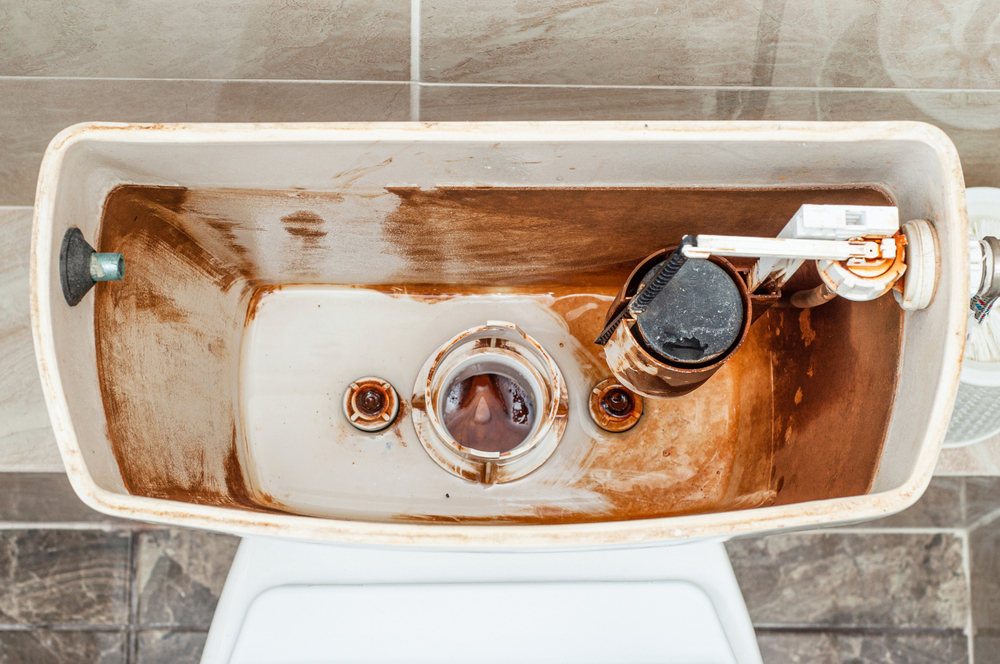
After taking care of business, you flush, hear a sad little gurgle, and then…nothing. No satisfying whoosh, no refill sound — just a stubborn toilet that refuses to do what you tell it to.
If your toilet tank is empty (or barely filling), that’s often the reason the bowl won’t flush properly. And while it can be a simple fix, an empty tank can also point to a deeper issue, like a faulty valve, a blockage in the supply line, or a more serious plumbing problem affecting water pressure. Thankfully, the professionals at Saffer Plumbing are here to help you understand the most common reasons for an empty toilet tank and how you can address the problem.
How a Toilet Tank Is Supposed to Refill
Normally, after you flush, the flapper lifts and tank water rushes into the bowl. Once the tank level drops, the fill valve opens to let fresh water in. As the water rises, the float rises with it, and the fill valve shuts off when the tank reaches the correct level.
If any part of that chain is interrupted, you can end up with a tank that won’t refill at all or that refills so slowly it might as well be empty.
Common Reasons There’s No Water in Your Toilet’s Tank
If you’re staring at a dry tank, the culprit is often one of a few usual suspects. Let’s walk through the potential causes of an empty toilet tank now.
1. The Shutoff Valve Is Partially Closed (or Fully Closed)
The shutoff valve is the small silver knob located on the wall behind or beneath your toilet. Sometimes, during cleaning or perhaps a curious toddler’s exploration, this valve gets bumped or turned to the “Off” position. If it’s even partially closed, the tank will fill painfully slowly or not at all.
2. A Clogged or Kinked Supply Line
The flexible metal or plastic tube connecting the shutoff valve to the bottom of your toilet tank is the supply line. Over time, calcium deposits or debris can build up inside this line, acting like a clog in an artery. And if water can’t get through the line, it certainly can’t get into your tank.
Sometimes, the problem is even simpler: the flexible supply line is kinked after being bumped, or it’s pinched too tightly behind the toilet. This restricted line will prevent enough water from reaching the tank, leaving you with a weak trickle or nothing at all.
3. A Faulty Fill Valve
If your toilet tank is refusing to refill, the fill valve is a prime suspect. The fill valve is the vertical assembly inside the tank that controls the water flow into the toilet tank. Over time, it can become worn or clogged with debris, which can impede water flow. An improperly positioned or broken fill valve can also prevent water from entering the toilet tank.
4. Float Problems
The float is basically the tank’s “sensor” that tells the fill valve when to open and when to stop. If the float is stuck in the “up” position, even if the tank is empty, the fill valve may think the tank is full and stay closed.
Some floats are a ball-and-arm style; others are a cylinder that slides up and down the fill valve shaft. Either way, if it’s rubbing against the tank wall, tangled, or set too high, it can prevent refilling and keep your toilet out of commission.
5. Debris and Sediment Inside the Valve or Tank
Are you living in an area with hard water or older pipes? Small bits of rust, scale, or sediment can travel through your pipes and lodge themselves inside the delicate openings of the fill valve. This is especially common after local water main repairs, which can stir up “junk” in the city lines that eventually finds its way into your home’s fixtures.
6. Water Pressure Issues
Ask yourself this: are other fixtures acting weird, too? If you notice that your faucets have a weak stream and your shower feels more like a light mist, the lack of water in your toilet tank might be a symptom of a larger water pressure issue. For example, a partially closed main valve, a failing pressure regulator, corrosion in pipes, or broader supply issues can interfere with your toilet’s ability to refill.
7. Recent Plumbing Work
If you recently had plumbing repairs done, it’s possible something didn’t get reopened fully. This is especially common when multiple valves are involved and one was left partially closed.
8. Hidden Leaks
Sometimes, the tank is filling, but the water isn’t staying there. If the flapper isn’t sealing properly, water can leak from the tank into the bowl and down the drain continuously.
Alternatively, a leak in the supply line, shutoff valve, or a nearby plumbing component can also reduce the amount of water reaching the tank. If you see damp flooring, bubbling paint, or a musty odor near the bathroom, it’s time to consider leak detection and repair.
Steps to Diagnose an Empty Tank
- Inspect the Fill Valve: Check the fill valve for any signs of damage or wear. You can also listen for a hissing sound, which can indicate a leak. If the fill valve appears damaged, replacing it may be necessary.
- Adjust the Float: Sometimes, simply adjusting the float is enough to fix the issue. The adjustment screw on the float assembly can be turned to change the water level. This is a simple fix that can often restore proper filling.
- Examine the Flush Handle and Trip Assembly: The flush handle, connected to the trip assembly, initiates the flush cycle. If either of these components is broken or improperly positioned, it can prevent the flush cycle from engaging correctly and may impact the refill process.
When to Call a Plumber in Baltimore for an Empty Toilet Tank
Could you troubleshoot a few basics yourself? Sure. But if you’re dealing with repeated failures or anything that hints at a bigger plumbing concern, calling a professional can save you time, stress, and water damage.
Call a plumber for a toilet repair if:
- The tank won’t refill at all after checking the shutoff valve.
- You have persistent non-filling, even after the toilet seems to “start working” again temporarily.
- You notice leaks, dampness, or water pooling near the toilet or supply line.
- The toilet has repeated fill valve or float issues.
- You suspect water pressure problems.
- You hear constant running, hissing, or intermittent refilling that won’t stop.
How Saffer Plumbing Can Help
At Saffer Plumbing, we start by pinpointing the root cause of the issue. Maybe you just need a straightforward plumbing repair: swapping a worn fill valve, correcting float settings, clearing debris, or replacing a water line that’s restricting flow. Or maybe the empty tank is the clue that leads us to something bigger, like water pressure concerns, aging shutoffs, or an underlying leak.
No matter why you have a dry toilet tank, you can count on us to target the heart of the problem so that you don’t have to worry about repeat issues. Feel confident about your plumbing again by calling our team for all the repairs you need!
Get Your Toilet Working Again Fast
An empty toilet tank can feel like a small problem…until it interrupts your whole day. The good news is that many causes of this issue are common and fixable. So, if your toilet tank won’t refill, keeps failing, or you’re worried about leaks or water pressure, contact us today to schedule a repair and get your bathroom back to normal.