
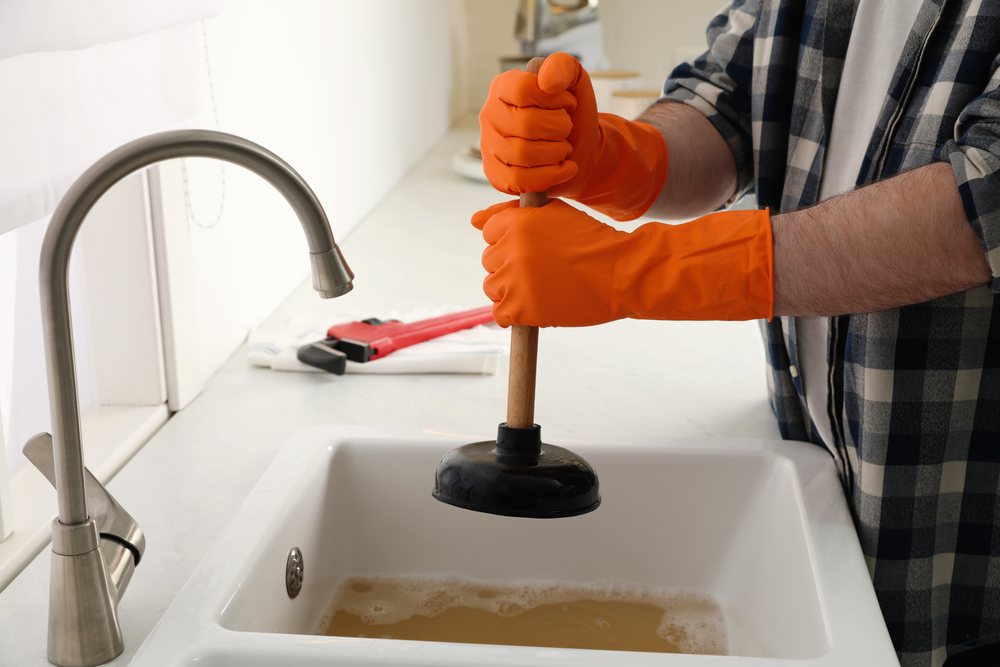
Have your drains started gurgling right before your guests were due to arrive? Or have you found that a basement floor drain began to smell foul after a heavy rain? If so, you might be dealing with a sewer backup. These messes can happen for several reasons, and they’re more than just gross. When wastewater can’t flow where it’s supposed to, it can damage flooring, drywall, furniture, and anything else in its path. For these reasons, acting quickly is key.
Below, we’ll break down what causes sewer backups and what you can do right away to address the problem.
What Is a Sewer Backup?
A sewer backup occurs when wastewater can’t move through the main sewer line (or your home’s drain system) and instead reverses direction, coming back up through sink drains, toilets, tubs, or basement floor drains. Since the problem often involves the main line or a major blockage, multiple fixtures may be affected at the same time.
The Most Common Causes of Sewer Backups
Sewer backups tend to come from a few repeat offenders. Here are the most common causes homeowners run into:
Tree Root Intrusion
Tree roots naturally seek moisture, and sewer lines can be a tempting target, especially if the pipe is older, cracked, or has weak joints. Roots can creep into tiny openings, expand over time, and trap debris until the line slows or becomes fully blocked.
Grease, Fat, and Food Buildup
Grease may go down as a liquid, but it cools and hardens inside your pipes. Over time, it clings to the pipe walls and collects food particles, forming stubborn clogs (often called “fatbergs”) that keep getting worse.
“Flushable” Wipes and Non-Flushable Items
Even wipes labeled “flushable” can cause major issues. This is because they don’t break down like toilet paper and can snag on rough pipe interiors, forming a net that traps other debris. Paper towels, feminine products, and dental floss are common culprits in these scenarios.
Heavy Rain and Sewer System Overload
After a storm, municipal sewer systems can become overwhelmed. And when the public main can’t keep up, water can push back toward homes, often showing up as a basement drain backup or foul odors.
Broken, Sagging, or Collapsed Sewer Lines
Older clay or cast iron lines can crack, corrode, or shift with soil movement. Sometimes, a section of pipe “bellies” (sags), allowing waste and water to pool instead of flowing out. That pooled area becomes the perfect place for clogs to form. Once the clog becomes large enough, wastewater will have nowhere to go but back up into your home’s lowest drains.
Blocked Sewer Cleanout or Improper Connections
In some cases, the issue isn’t inside the home at all; it’s at a cleanout that’s blocked or damaged, or a connection that wasn’t installed correctly. These problems can make diagnosing the backup tricky without the right tools.
What to Do Immediately If You Suspect a Sewer Backup
When you suspect a sewer backup, quick action matters. Follow these steps right now:
- Stop using water immediately. Turn off your faucets, don’t flush any toilets, and pause the dishwasher and washing machine. Any water you send down the drain will only add to the volume of the backup.
- Keep people and pets away. Limit contact with the affected area, particularly if sewage has come up through a drain. Raw sewage carries pathogens like E. coli and Salmonella. Close any doors to the area, if possible.
- Turn off electricity in the affected area if needed. If water is near outlets, appliances, or your electrical panel, don’t take any chances. Turn off the electricity ASAP.
- Ventilate the space. Open windows if you can safely do so. Odors can be intense, and fresh air helps.
- Call a plumber. Sewer backups rarely fix themselves, and the faster a professional gets eyes on the issue, the better your odds of minimizing damage.
What Not to Do During a Sewage Backup
In a stressful moment, it’s easy to do the wrong thing while trying to help. Fortunately, the plumbers at Saffer Plumbing are here to guide you through the worst of the situation. While dealing with a sewer backup in your home, make sure you avoid these common mistakes:
- Don’t Use Chemical Drain Cleaners: These chemicals are highly corrosive. If your pipe is completely blocked, the chemicals will just sit on top of the clog, eating away at your pipes and creating a toxic splash hazard for the plumber who eventually has to fix it.
- Don’t Reach Into the Water: Never attempt to clear a drain (even a floor drain) with your bare hands.
- Don’t Wade Into Standing Water: Sewer water can contain pathogens, so you should avoid contact with it whenever possible.
- Don’t Vacuum Up the Sewage: Trying to vacuum sewage with a regular shop vac can contaminate equipment and spread bacteria.
How a Plumber Diagnoses and Fixes Sewer Backups
When Saffer Plumbing responds to a sewer backup call, the goal is to identify the cause quickly, clear the blockage safely, and help prevent the issue from returning. The process often looks like this:
Step 1: Camera Inspection
A sewer line camera inspection is one of the best ways to diagnose a sewer backup. A small, specialized camera is fed through the line to show exactly what’s happening, whether that’s roots growing into the line, grease buildup, a collapsed pipe, or a sagging section holding standing water. This removes guesswork and helps the plumber recommend the right fix.
Step 2: Snaking or Hydro Jetting
Once the issue is visible, the plumber can determine the best path forward. Depending on the cause and severity of the problem, they may use:
- Snaking (Drain Auger): A snake breaks through clogs and pulls out debris like wipes or paper buildup. It’s often a fast way to restore flow.
- Hydro Jetting: Hydro jetting uses high-pressure water to scour the inside of the pipe walls. It’s especially effective for lines that keep clogging due to a buildup of grease or sludge.
Step 3: Repair Options
If the camera inspection reveals broken, collapsed, or severely deteriorated piping, your plumber may recommend sewer line repairs, such as:
- Spot repairs for a damaged section
- Replacing a collapsed pipe
- Correcting a belly/sag that causes repeat clogs
The right choice depends on pipe material, location, and the extent of damage.
Step 4: Cleaning Guidance and Safety Recommendations
A plumber will also give cleaning guidance because sewer backups can involve contamination. In many cases, porous materials (like certain carpeting or padding) may need to be removed, and the area should be disinfected properly. If the backup was significant, professional remediation may be recommended.
Get Help With a Sewer Backup
Sewer backups can feel overwhelming, but you don’t have to take on the problem by yourself. Saffer Plumbing can identify the cause with a camera inspection, restore proper flow with snaking, hydro jetting, or repairs, and help prevent repeat backups so you can feel confident in your home again.
If you’re seeing signs of a sewer line problem and suspect a sewer backup, contact Saffer Plumbing today to schedule a service and get the situation under control quickly.