
Most homeowners believe a sewer line problem will be impossible to miss, like sewage flooding the basement or a toilet that simply won’t flush. In reality, a broken or collapsed sewer line often starts with more subtle clues: a strange gurgle in the pipes, a drain that “sort of” works and then doesn’t, or an odor that comes and goes. These warning signs are easy to dismiss… until the damage spreads and the repair becomes far more invasive than it needed to be.
When sewer lines crack, collapse, or become partially blocked (often by roots, shifting soil, corrosion, or buildup), everything upstream — your drains, toilets, and fixtures — feels the impact. Eventually, the small problems you noticed at first will lead to major repairs, property damage, contamination concerns, and costly cleanup. Don’t let this become your fate; recognize the top signs of a broken or collapsed sewer line and act quickly.
Top Warning Signs Your Sewer Line May Be Damaged
Below are the most common red flags that point to a broken, cracked, sagging, or collapsed sewer line. On their own, some of these could be caused by smaller plumbing issues, but when they show up together or keep returning, it’s time to seriously consider a main line problem.
Frequent Backups
A clog that comes back again and again is one of the biggest warning signs of a broken or collapsed sewer line. If you’ve tried plunging and snaking, and the problem keeps returning, the issue may not be a simple blockage near the fixture. A damaged sewer line could be catching debris repeatedly, creating recurring backups.
Multiple Fixtures Clogging at Once
When one sink clogs, it’s often a localized problem. When multiple drains start acting up (such as when the tub drains slowly while the toilet bubbles and the kitchen sink starts backing up), that points to a main line issue.
Why? Because those fixtures share the same pathway out of your home — the main sewer line. And if that line is compromised, everything connected to it can struggle at the same time.
Strange Gurgling Sounds
Gurgling isn’t just the background notes of an old house. It’s often the sign of trapped air being forced around an obstruction in the water. You might hear bubbling after flushing or a gurgle when a nearby sink drains. In many cases, this means the system is no longer vented or flowing correctly.
Persistent Sewer Odors
A sewer smell that lingers is never something to ignore. Sometimes, the odors are caused by a dry drain trap or a vent issue, but if the smell is persistent, returns often, or seems stronger around certain drains, it can indicate a break in the sewer line or a leak allowing gases to escape.
Outside, you might notice a sewage odor in the yard, near the foundation, or along the route where the sewer line runs to the street. If you smell it after heavy rain or when you’re using a lot of water (on laundry day or during long showers, for example), that’s an even bigger clue that something is wrong underground.
Sewage in Basement Floor Drains
A backup through a basement floor drain is one of the most alarming signs of a broken sewer line. When wastewater can’t move forward, it looks for the lowest point to escape. That’s often a basement drain, utility sink, or low-lying shower. If you see standing water or, worse, raw sewage pooling around this drain, treat it as a plumbing emergency and call a professional for a sewer line repair right away.
Lush, Green Patches of Grass
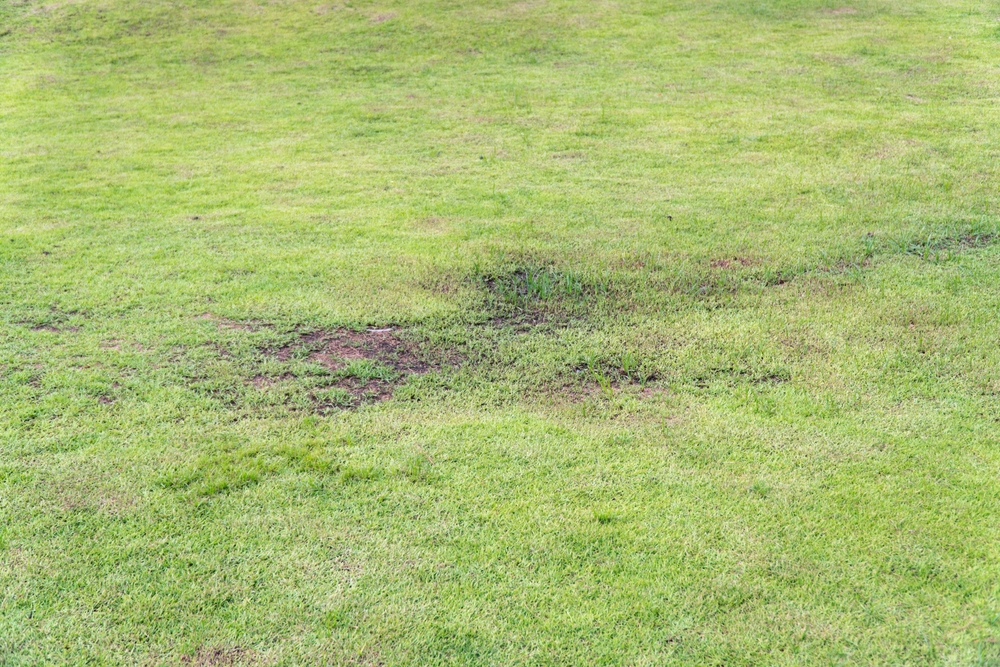
If one part of your lawn suddenly looks healthier than the rest (showing a brighter green, exhibiting faster growth, or looking unusually thick), it could mean a leaking sewer pipe is feeding the soil from underneath.
Sinkholes or Ground Settling
When a sewer pipe breaks, the constant flow of water can wash away the soil surrounding the pipe. Over time, this creates a void. You might notice dips in your lawn, pavers that have suddenly shifted, or cracks in your driveway or sidewalk. If the leak is close to your home, it can even cause foundation settling.
Increased Rodent or Insect Activity
Rats live in sewers, and they are experts at finding cracks in pipes to migrate from the city main into your yard or home. Similarly, cockroaches and sewer flies are attracted to the moisture and waste. If you have a sudden pest infestation that won’t go away, the entry point might be a broken pipe.
How Plumbers Confirm a Broken Sewer Line
When sewer line symptoms point to something deeper than a typical drain clog, plumbers use a few reliable methods to confirm what’s happening underground. The most common is a sewer camera inspection, where a specialized camera is guided through the line to identify cracks, root intrusion, sagging sections, blockages, or collapse. In some cases, additional testing helps determine the exact depth and position of the damaged area so repairs can be targeted and efficient.
Solve Your Sewer Line Issues Now
If you suspect you have a broken or collapsed sewer line, start by limiting your use of water (to reduce the risk of backup), avoid chemical drain cleaners that can complicate the situation, and take note of which fixtures are affected and when symptoms occur. Then call Saffer Plumbing. Our Baltimore, MD, team can inspect the line, pinpoint the problem, and recommend the right repair solution, so you can protect your home and get back to normal in a snap.