
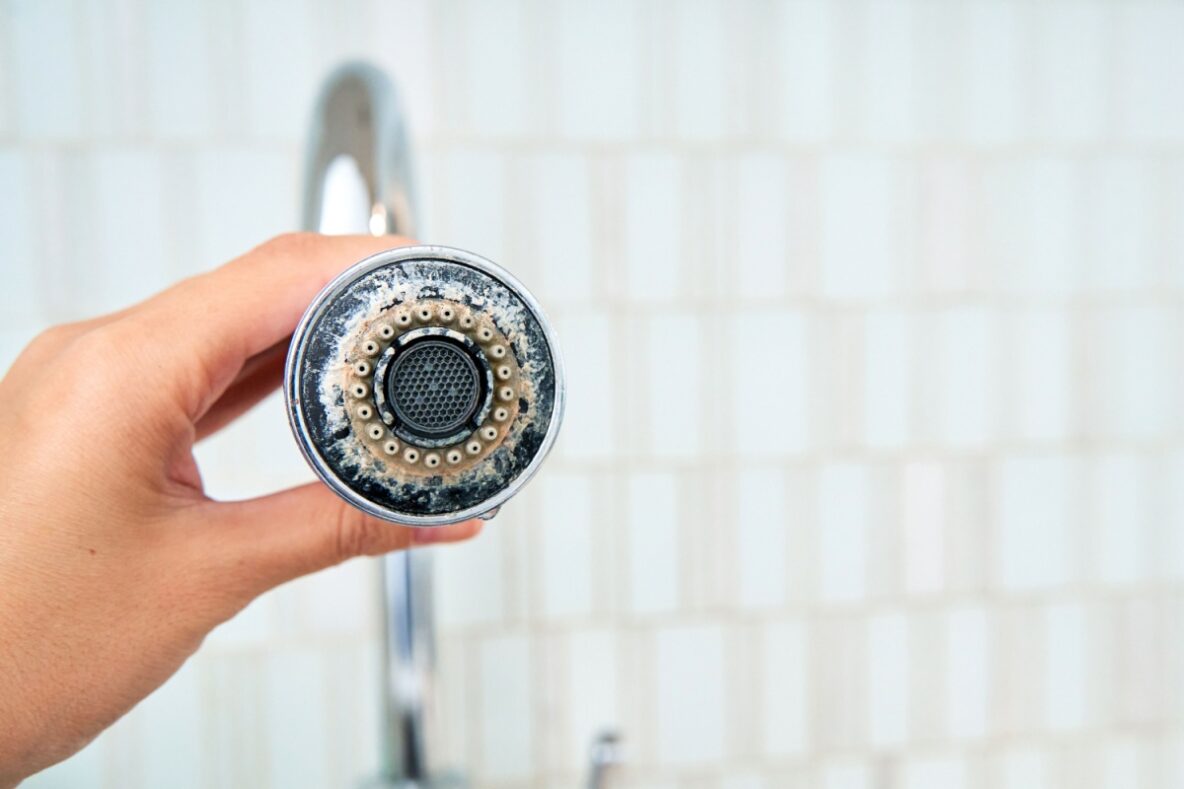
Are your shiny chrome shower heads or faucets sporting a white, crusty residue? That chalky buildup is a collection of minerals commonly found in hard water, and it’s a widespread problem across Baltimore and beyond. While the limescale may simply seem like a minor cosmetic issue, it can actually affect your home’s water pressure and damage your plumbing fixtures.
But here’s the good news: you can absolutely take steps to remove this crusty substance and, more importantly, prevent it from coming back. Let’s get into what this white crust is and how you can keep your faucets sparkling for good.
What Is That White Crust on Your Faucets and Shower Heads?
That chalky, white, and crusty substance has a name: limescale.
Limescale is the leftover deposit from hard water. Hard water is simply water that has a high concentration of dissolved minerals, primarily calcium and magnesium. While these minerals are not harmful to your health, they can be a major nuisance for your home’s plumbing and fixtures.
Why Does Limescale Build Up on Faucets and Shower Heads?
Each time you use your sink or shower, tiny droplets of hard water remain on the surface of your faucet or shower head. As the water evaporates, minerals are left behind, creating a chalky layer that continues to thicken with repeated exposure.
The entire process is accelerated by heat. That’s why you often see the worst buildup on shower heads (from hot showers).
Why Is Limescale a Problem for Shower Heads and Faucets?
If you don’t clean the limescale off, the buildup will continue to grow. On a shower head, it clogs the small nozzles, leading to weak water pressure and erratic, sideways sprays. On a faucet, the white residue builds up around the end of the spout (the aerator) and causes water to spit everywhere. Additionally, it’s important to note that limescale can permanently etch and damage delicate fixture finishes if left for too long.
How to Remove Mineral Buildup From Faucets
The good news is that you don’t need harsh chemicals or professional-grade tools to remove limescale buildup. Here’s how you can clean it safely and effectively from faucets and shower heads using simple household supplies.
For Clogged Shower Heads
- Get a plastic bag large enough to fit over the entire shower head. A sturdy zip-top bag or even a simple grocery bag will work.
- Fill the bag about halfway with plain white vinegar.
- Secure the bag around the shower head so that the entire head (especially the nozzles) is submerged in the vinegar. Use a strong rubber band, a zip tie, or a twist tie to hold the bag firmly in place on the shower arm.
- Let it soak. For light buildup, 30-60 minutes might be enough. For stubborn, crusty deposits, you may want to leave it for several hours or even overnight.
- Remove the bag and pour the vinegar down the drain.
- Use an old toothbrush or a soft-bristled scrub brush to gently scrub the face of the shower head. The limescale should break apart and scrub away easily.
- Finally, turn on the hot water for a minute to flush out any remaining mineral deposits from inside the nozzles.
For Faucets and Aerators
- Clean the Aerator: The aerator is the small, screened cap at the very tip of your faucet where the water comes out. Most of them can be unscrewed by hand (turn it counterclockwise). If it’s stuck, wrap a cloth or rag around it and use a pair of pliers to gently grip and turn it. The cloth will prevent the pliers from scratching the finish.
- Soak the Aerator: Drop the aerator into a small cup or bowl filled with white vinegar and let it soak for about an hour.
- Scrub and Rinse: After soaking, use an old toothbrush to scrub the screen and threads, removing all the loosened gunk. Rinse it thoroughly with water and screw it back onto the faucet.
- Clean the Faucet Body: To remove buildup around the base or handles of your sink faucet, soak a few paper towels or a rag in vinegar and mummy-wrap them tightly around the affected areas. Let them sit for an hour, then remove and scrub the area with your brush. Wipe everything clean with a damp cloth.
How to Prevent Limescale From Coming Back
Cleaning your fixtures is a great first step, but it’s a temporary fix. As long as you have hard water, the limescale will return. If you want a long-term solution, you have to tackle the problem at its source.
The only true, permanent solution to limescale is to soften your water before it ever reaches your fixtures. A whole-home water softener is a system that intercepts the water as it enters your house and removes hard minerals like calcium and magnesium, typically replacing them with sodium ions.
This soft water not only stops limescale from forming on your faucets and in your shower, but it also:
- Prevents mineral buildup inside your pipes.
- Extends the life and efficiency of water-using appliances (like your dishwasher, washing machine, and water heater).
- Allows soaps and detergents to lather more effectively (so you use less).
- Leaves your skin and hair feeling softer and less dry.
With benefits like these, who wouldn’t want to invest in a water softening system?
Don’t Let Hard Water Win
If you’re struggling with stubborn buildup, or if your fixtures are already showing signs of wear and tear, Saffer Plumbing is here for you. We can assist with expert faucet repairs and shower head replacements to get your kitchen or bathroom looking and functioning like new. More importantly, we can help you tackle the root of the problem. Our team can install a whole-home water softener system to prevent the same problem from occurring in the future, protecting your entire plumbing system from the very beginning.
If hard water is trying to get the best of your home, connect with our professionals at Saffer Plumbing today. We would be happy to discuss your options and help you say goodbye to that crusty white residue for good!